Project Genie and Genie 3: interactive AI worlds
Google released Project Genie to US AI Ultra users. How text and images become interactive worlds, and how a world model differs from video generation.
- AUTHOR
- Karol Rapacz / CEO of Breachroad · OSCP · PNPT
- PUBLISHED
- 29 January 2026
- READING TIME
- 11 min read
- TOPIC
- AI Security
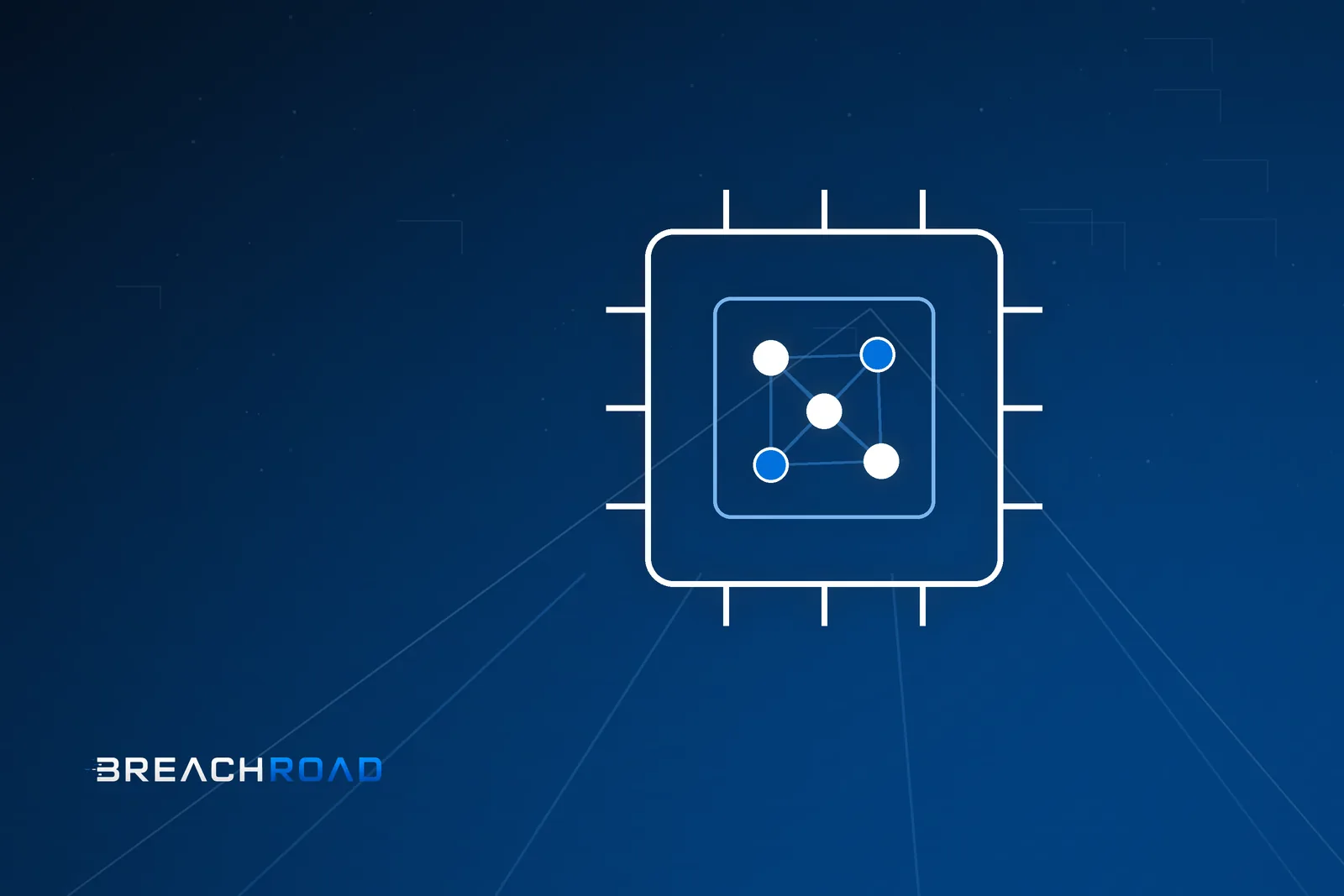
On 29 January 2026, Google made Project Genie available to adult Google AI Ultra subscribers in the United States. The experimental prototype creates, explores and remixes interactive environments from text and images. Its foundation, Genie 3, generates the path ahead in real time as a user moves.
This is not a conventional game engine with fixed geometry and deterministic physics. A video generator predicts frames for a set sequence; a world model must respond to action, preserve object location and predict consequences. Google itself called Project Genie a research prototype and acknowledged limits in realism and character control.
Consistency is harder than a beautiful frame
In traditional 3D, an object continues to exist outside the camera. A generative model must remember that a door was opened, an item remains behind the player and a corridor returns to the same room. Every step lengthens the dependency horizon. A short impressive demo does not prove stability over a long session.
World models may support robotics and agent training, rare-event simulation, spatial prototyping and education. A simulation is not evidence of physical-world behaviour, however. An agent can learn model artefacts instead of real laws.
Evaluating a world model
Look beyond image quality:
- object persistence outside the viewport,
- consistent responses to repeated actions,
- horizon length before scene degradation,
- controllability and input latency,
- diversity without training-data copying,
- session reproducibility and auditability.
Enterprise use also raises rights to prompts and reference images, moderation, recording privacy and realistic impersonation of places or people. Synthetic content should be labelled and domain experts should approve training scenarios.
World models as agent environments
The compelling direction is an agent–environment loop: a language model selects an action, the world model generates consequences and feedback drives learning. If the environment contains exploitable artefacts, the agent may “beat the simulator” without solving reality. Independent validation environments and transfer tests are essential.
Project Genie matters because generation moves from passive content to interaction. It is not proof of AGI or a ready replacement for Unity. It is a public experiment in an infrastructure that may train future agents. Our browser-agent security guide covers action controls.
From prompt to interaction
The user defines a world with text or a reference image. At every step the system combines the current view, history and control action, then generates the next observation within an interactive latency budget. Error accumulation and latency interact: a larger model may be more accurate but slower.
Research architectures should separate state representation from rendering. If memory consists only of the previous frame, returning after a long path is difficult. An external map or latent state may improve persistence but adds cost and data that needs versioning.
Safe simulation use
A training scenario should retain a label, seed, model version and limitations. Agent success in one generated world cannot pass directly to production. Validate against a conventional simulator, physical environment or independent recordings.
Robotics needs a conservative fallback. A world model may miss a slippery surface, an off-camera person or sensor latency. A separate safety controller must be able to stop the device outside the generative loop.
World provenance
A reference image may contain a face, brand or private interior. Define retention, training use and whether remixes become public. Moderate the prompt, input and generated states because a safe starting scene can evolve into disallowed content.
Is the world an exported 3D file? Google’s announcement describes real-time generation of the path ahead, not complete deterministic geometry. It differs from a traditional asset pipeline.
What should count as progress
The key is not one photorealistic frame but longer consistent interaction at low latency. Compare versions on the same routes: return to start, manipulate an object, change lighting and respond to an unexpected action. Improvement there demonstrates a better world model rather than only a better image generator.
Primary sources: Google — Project Genie, Google DeepMind — Genie 3.