


01
Employees
We practise decisions made under time and authority pressure.
- Phishing, vishing, QR codes and fake sign-in
- MFA fatigue, passwords and secure reporting
- Data, devices and working away from the office
We build the habits people need during a real incident — from recognising pressure and impersonation to reporting the event correctly.
This is not one generic webinar for the entire company. Scenarios are mapped to roles, tools and realistic attack paths, while success is measured through behaviour and reporting quality rather than attendance alone.
We practise decisions made under time and authority pressure.
Scenarios follow the permissions and processes of each role.
A controlled campaign produces evidence for process improvement.
We identify roles, communication channels, critical processes and relevant incident history.
Language, difficulty, excluded data and the employee-support model are agreed in advance.
Short practical modules and approved exercises run without collecting real passwords.
We report behaviour, process gaps and a follow-up plan for selected groups.
The value comes from testing the entire verification process, not counting clicks.
This is a safe exercise model. Scope and communication require prior organisational approval.
The message uses realistic context without sensitive data
The landing page collects no passwords or tokens
The exercise measures second-channel verification and reporting time
The outcome changes the payment procedure and drives targeted role training
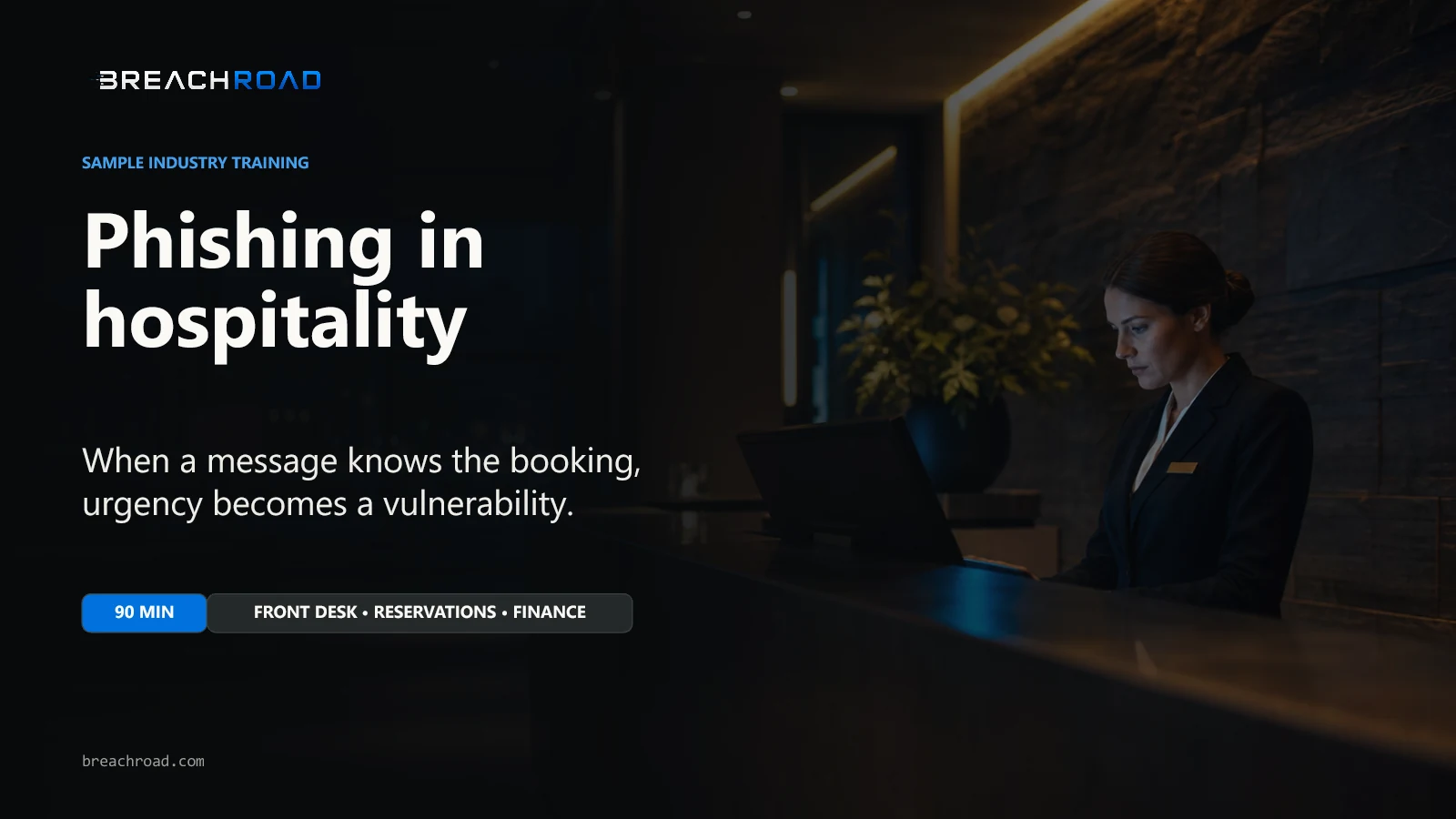
A complete 90-minute sample designed for hotels: 35 slides, realistic messages, role-based decisions, a facilitated incident tabletop and trainer notes.
No. The simulation measures decisions and reporting, not real authentication data.
Yes. Modules can be remote or on site, with length and scenarios adapted to each group.
We recommend team and process-level analysis without public shaming. The objective is lower risk and faster reporting.
Share the roles, headcount and critical processes. We will propose a programme and a safe measurement model.