NGINX HTTP/2: CVE-2026-123633 and RCE risk
Two NGINX HTTP/2 flaws can cause denial of service or potential RCE. We analyse CVE-2026-123633, CVE-2026-123007, fixed versions and safe rollout.
- AUTHOR
- Karol Rapacz / CEO Breachroad · OSCP · PNPT
- PUBLISHED
- 20 November 2026
- READING TIME
- 23 min read
- TOPIC
- Vulnerabilities and CVEs
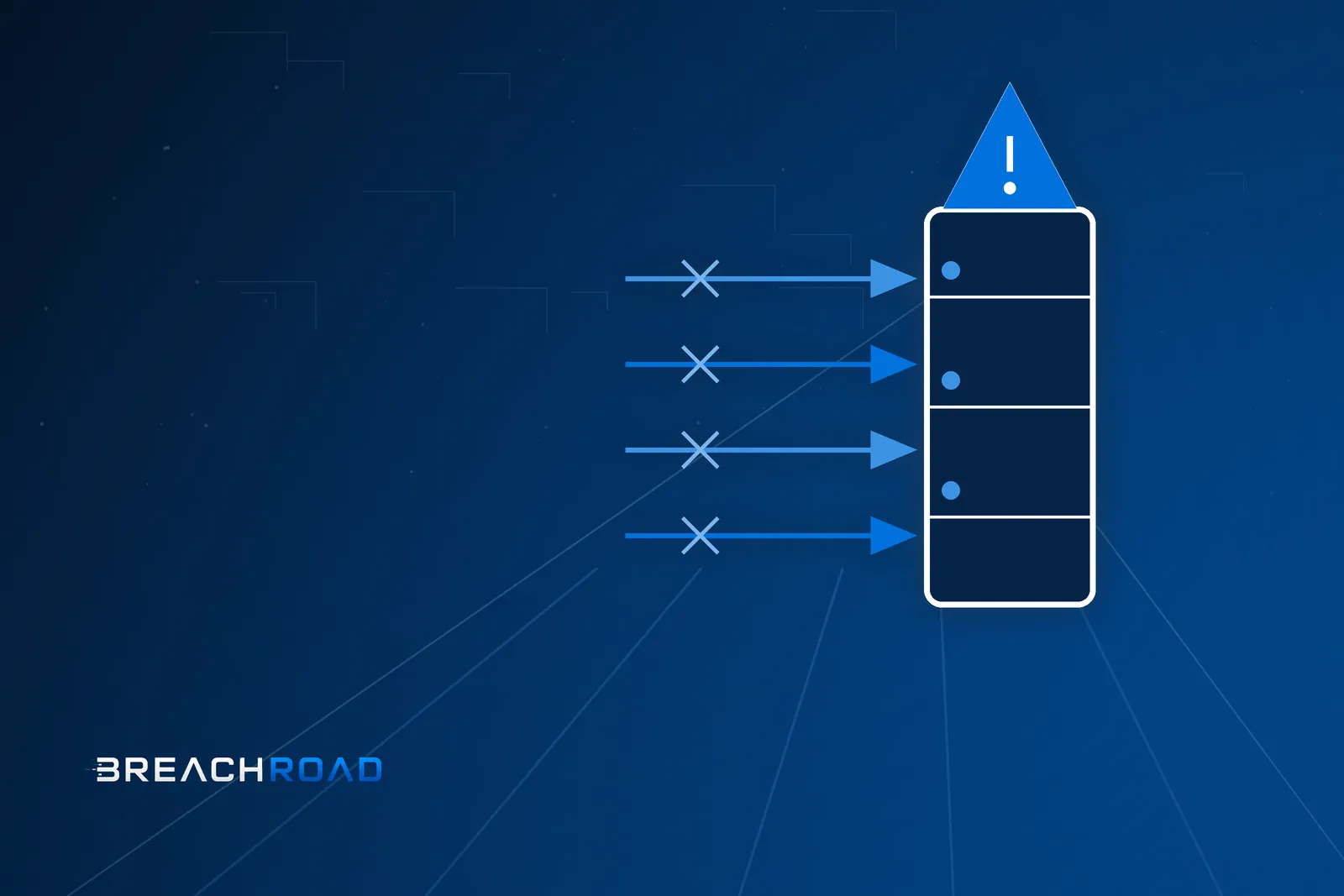
Google Cloud published bulletin GCP-2026-089 on 20 November 2026 for two serious HTTP/2 vulnerabilities in NGINX: CVE-2026-123633 and CVE-2026-123007. Under specific conditions, a remote unauthenticated attacker can crash a worker process and potentially execute code when ASLR is disabled or bypassed.
The scope covers NGINX Open Source and NGINX Plus, but not every service associated with NGINX or Google Cloud. Google’s managed infrastructure—including Google Front End, Cloud Load Balancing, the GKE control plane, Cloud Run, Cloud Functions and App Engine—is not affected. Customers primarily need to act on NGINX they operate themselves on VMs, in containers, through ingress controllers or from Marketplace images.
NGINX Open Source should be upgraded to 1.31.9 mainline or 1.30.7 stable. Disabling HTTP/2 is a temporary mitigation for these two flaws, but F5 disclosed eight additional CVEs in the same update set. Removing one protocol does not replace upgrading the entire component.
What GCP-2026-089 confirms
The Google Cloud bulletin references F5 master advisory K000164058, published on 18 November. Google issued cloud-specific customer guidance on 20 November.
The confirmed scope is:
- CVE-2026-123633 affects NGINX Open Source 1.19.7–1.31.8 and corresponding NGINX Plus lines;
- CVE-2026-123007 affects NGINX Open Source 1.9.5–1.31.8 and corresponding NGINX Plus lines;
- both flaws occur in HTTP/2 processing;
- impact is worker crash and, under additional conditions, potential RCE;
- attack is remote and requires no authentication;
- fixed Open Source releases are 1.31.9 and 1.30.7;
- F5 disclosed ten NGINX CVEs in the November set.
The bulletin does not report active exploitation, confirmed victims or a reliable public RCE PoC. The word “potentially” matters: the vendor does not claim that every crash yields code execution.
CVE-2026-123633: use-after-free during connection draining
CVE-2026-123633 is a re-entrant heap use-after-free in ngx_http_v2_module. Google says the condition arises during reverse proxying with directives such as:
proxy_pass;fastcgi_pass;uwsgi_pass;scgi_pass;grpc_pass.
The other stated condition is worker_connections exhaustion during HTTP/2 connection draining. A use-after-free occurs when code reuses a memory object after its lifecycle has ended. At minimum, the process may detect corruption and terminate. In a more severe path, an attacker may try to influence the contents of the released region.
Google describes RCE as potential where ASLR is disabled or bypassed. “Every NGINX reverse proxy gives an instant shell” would therefore be wrong. A public, high-traffic reverse proxy is still a valuable boundary, and worker denial of service alone can materially affect availability.
CVE-2026-123007: HTTP/2 flow-control windows
CVE-2026-123007 concerns flow-control window handling during crafted HTTP/2 traffic. Unlike the first flaw, it does not require reverse proxying. It may affect NGINX serving static content directly over HTTP/2.
HTTP/2 multiplexes streams over a connection and uses flow-control windows to regulate in-flight data. A bug in state transitions or window accounting can cause unsafe memory behaviour and process failure. Google again identifies potential RCE if ASLR is disabled or bypassed.
This mechanism is different from HTTP/2 Rapid Reset, which abused mass stream creation and cancellation to consume resources. A shared protocol does not imply a shared patch or identical detection strategy.
Denial of service and RCE need separate planning
A worker crash may sound less severe than code execution, but many applications depend on one ingress process pool. Repeatable crashes can cause:
- elevated 502 and 504 errors;
- client retries and additional load;
- dropped long-lived connections;
- unhealthy replicas and load-balancer flapping;
- cascading effects on upstream services;
- loss of access to administrative APIs needed for response.
Potential RCE raises priority, but should not eclipse the more direct availability scenario. Teams need both a security update and a traffic-continuity plan for restarts or exploitation attempts.
Which environments belong in scope
Inventory:
- NGINX on Compute Engine and other VMs;
- NGINX containers in GKE and elsewhere;
- NGINX Ingress Controller and associated images;
- reverse proxies in DMZ tiers;
- Cloud Marketplace and Click-to-Deploy images;
- NGINX Plus, NGINX App Protect and products named by F5;
- appliances and third-party products embedding NGINX.
Searching for an operating-system package name is insufficient. NGINX may be copied through a multi-stage image, deployed with Helm, embedded in a vendor product or run as a sidecar. Link the binary version to whether a listener negotiates HTTP/2 through ALPN or listen ... http2 configuration.
What Google says is unaffected
Google identifies its managed platform layers as unaffected: Google Front End, Cloud Load Balancing, the GKE control plane, Cloud Run, Cloud Functions and App Engine. An organisation relying solely on those platforms without its own NGINX does not need to patch Google’s infrastructure.
Cloud Run can still host a customer container that includes NGINX, and GKE can run a customer-managed ingress controller. “Cloud Run is unaffected” describes the managed platform, not arbitrary software the customer packages into an image. Read responsibility boundaries layer by layer.
Upgrade and temporary mitigation
Target remediation
Upgrade NGINX Open Source to 1.31.9 mainline or 1.30.7 stable. NGINX Plus requires the fixed release applicable to its line, as listed by F5. The update should remediate all CVEs in the 18 November set, not only the two HTTP/2 issues.
Temporary mitigation
If immediate patching is impossible, Google recommends disabling HTTP/2 on exposed listeners. For ingress-nginx, its example is use-http2: "false"; standalone NGINX can remove HTTP/2 listener directives and reload in a controlled manner. Another option is a Google Cloud External Application Load Balancer that communicates with the NGINX backend over HTTP/1.1.
This mitigation:
- reduces reachability of the two described HTTP/2 CVEs;
- can alter performance and client behaviour;
- does not fix the other eight CVEs in the F5 release set;
- requires verification that no other listener still advertises
h2.
A safe NGINX rollout
1. Inventory versions and exposure
Collect the version from the live binary, image digest, listener configuration, traffic type and owner. Flag public endpoints, administrative portals and internal load balancers reachable from untrusted segments.
2. Test effective configuration
Run syntax validation before deployment and compare effective configuration rather than templates alone. Check dynamic modules, ALPN behaviour, gRPC upstreams and worker_connections limits.
3. Canary and observe
Send a small share of traffic to the fixed image. Monitor crashes, handshake errors, 4xx/5xx rates, latency, upstream retries and memory. Increase the share only while indicators remain stable.
4. Remove old instances
Publishing a new image does not remove vulnerable pods and VMs. Check draining, PodDisruptionBudgets, autoscaling, stopped instances and disaster-recovery environments. Admission or pipeline policy should block redeployment of the old digest.
5. Retest safely
Confirm the negotiated protocol and absence of vulnerable images without crashing production. Load tests and negative protocol cases belong in an isolated environment with representative configuration.
Detection and response
The cited F5 and Google materials do not provide a universal attack IOC. Correlate:
- abrupt worker exits, signals and core dumps;
- spikes in 502/504 responses and rapid pod restarts;
worker_connectionsexhaustion and unusual concurrent stream growth;- HTTP/2 flow-control anomalies and protocol errors;
- many short connections from a narrow source set;
- child processes or egress that NGINX does not normally create;
- configuration, module or image changes following a crash.
A crash loop after crafted traffic may indicate a denial-of-service attempt. An abnormal process, file change or outbound connection requires treating the host as potentially compromised. Isolation and rebuilding from a trusted image are safer than restarting only the worker.
ASLR helps, but is not remediation
The bulletin ties potential RCE to disabled or bypassed ASLR. That does not make patching optional when ASLR is enabled. ASLR makes address prediction harder; it does not remove the use-after-free or flow-control flaw. Attackers may chain bugs, use an information leak or focus on reliable denial of service.
Validate ASLR, NX, seccomp, a read-only filesystem, non-root execution and minimal egress as impact-reduction layers. None replaces a fixed NGINX release.
Vendor facts versus Breachroad analysis
F5 and Google confirm: affected versions, two distinct HTTP/2 mechanisms, remote unauthenticated reachability, worker crashes, potential RCE under additional conditions, fixed releases and the unaffected managed Google infrastructure layers.
The cited notices do not confirm: active exploitation, named victims, universal RCE PoC or that every NGINX server exposes an affected listener.
Breachroad conclusions include: inventory priorities, canary design, detection hypotheses and hardening recommendations. Validate them against the actual environment.
These CVEs show that a proxy is simultaneously a protocol, memory-safety and availability boundary. Kubernetes and container security must include ingress and helper images, while vulnerability management must locate the same binary across VMs, containers and vendor products.
Cybersecurity training for technical teams helps administrators distinguish confirmed DoS conditions from potential RCE and deliver a safe change. A cloud and infrastructure security assessment can validate ingress, images, HTTP/2 exposure, segmentation and telemetry.